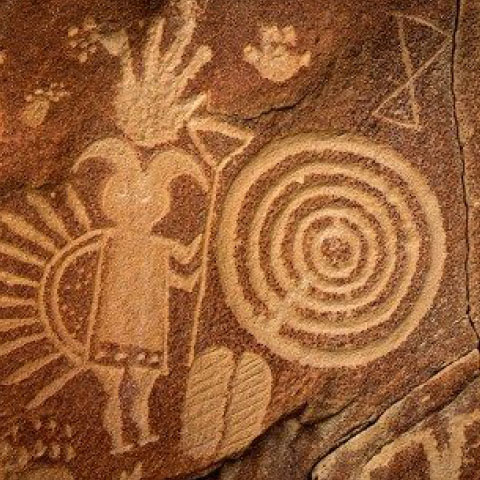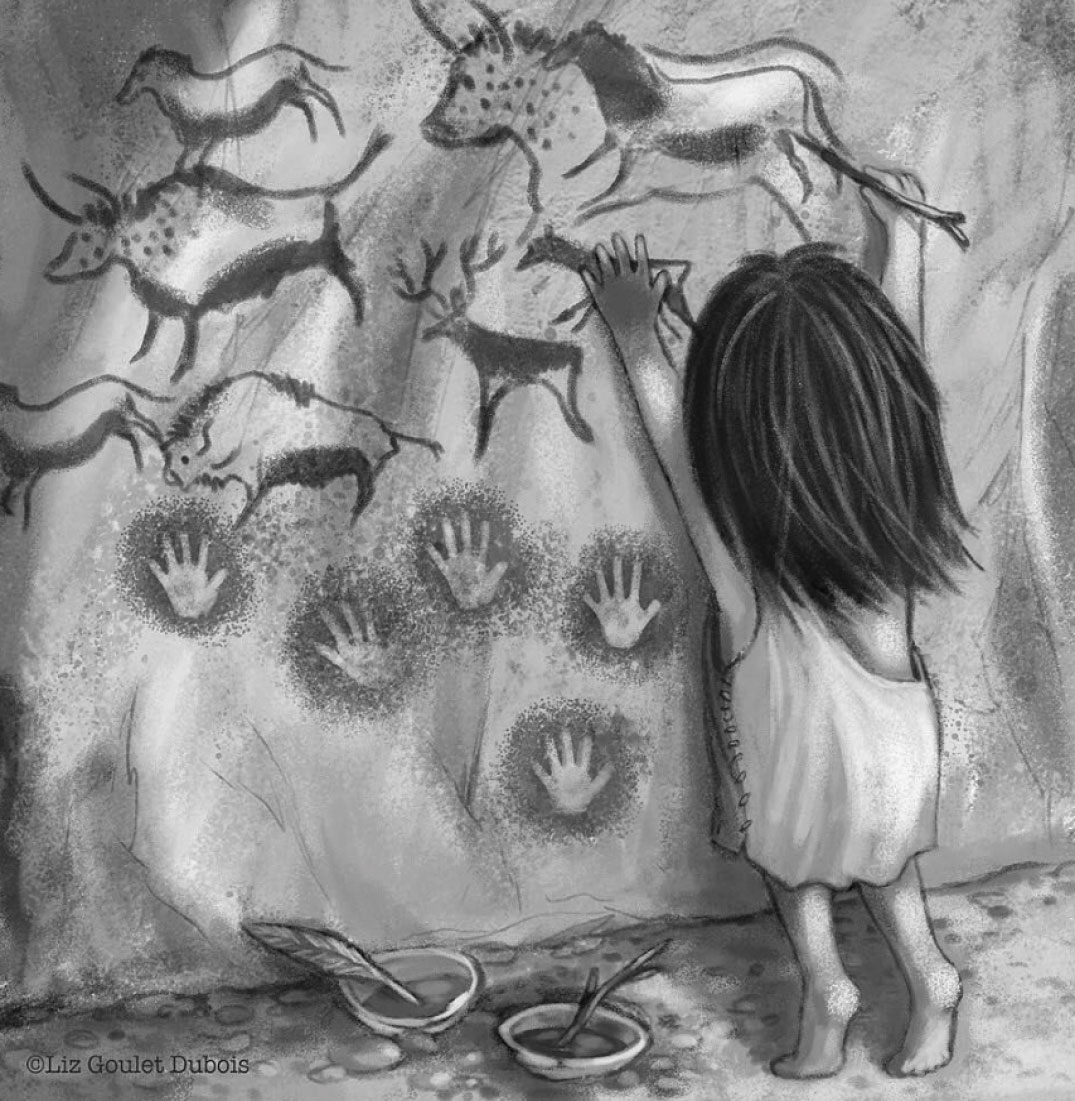
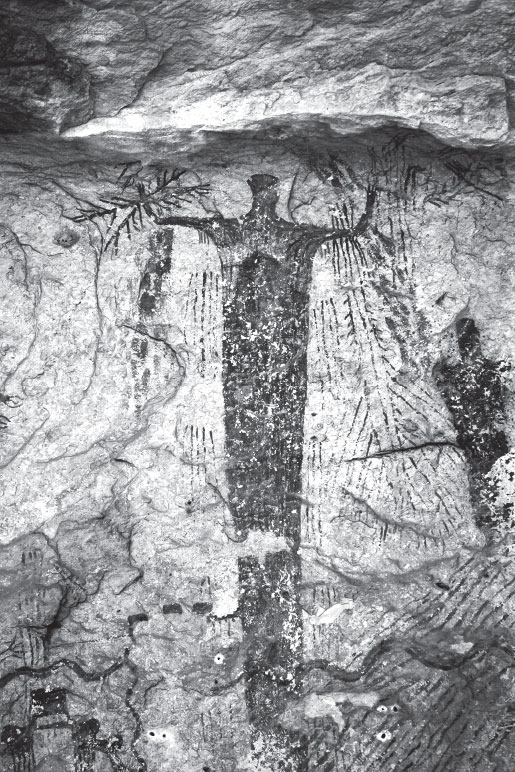
I often think about the first person who pressed a palm dipped in crushed red ochre against a damp limestone cave wall tens of thousands of years ago. It was surely not a practical act. It didn't hunt for them nor did it keep the rain out.
But what did that hand mean to the person who left it there?
Was it a warning? A sign that shelter was close? A message for the next wanderer who came upon the cave? Was it a promise, a talisman, a way of calling on something larger than themselves? Perhaps it was simply a hand, pressed against stone because, at that moment, the person wanted to leave it there. We will never know.
To us, thousands of years later, it is evidence of an impulse that feels all too familiar, the desire to leave something behind.
Perhaps that is one of the first things art asks us to consider: where meaning actually comes from. The handprint has remained on the wall, but everything around it has changed. We bring our own questions to it now, filling in what we cannot know. The mark is the same. What it means to us is not.
We make the mark. Then we give it meaning.
Perhaps the impulse to leave a mark is also where our relationship with art begins. Someone once looked at a line, a shape, a colour, and decided it was worth making. Thousands of years later, we still stop for things that have no obvious use. We still allow ourselves to be moved by a painting, a photograph, a sculpture, a fragment of something that another person thought was worth bringing into the world.
And then there is the instinct to collect.
It begins in childhood, smooth stones, marbles, leaves, trinkets, broken shells dug out from warm sand. Slipped in to a pocket because you simply wanted to keep it. We like to think collecting begins with taste, discernment or an appreciation of value. But the collector is simply the child who never quite stopped noticing things.
We grow more sophisticated about what we choose to keep, but the impulse remains. The things we gather eventually became a record of our changing selves. Who we were at twenty-five, what caught our eye then, what we grew into, and the things we wanted, for one reason or another, to keep from disappearing.
For anyone who has stood before a canvas long enough knows that the magic happens in the quiet space between the work and the eye. The market can tell us what an artwork costs. It can tell us about provenance, scarcity, reputation and demand. All of these things matter. But none of them can quite explain the moment when you see something and think, I like this. It speaks to me.